Around the Institute for Advanced Study, that intellectual Arcadia where the blackboards have signs on them that say Do Not Erase, Dyson is quietly admired for candidly expressing his doubts about string theory’s aspiration to represent all forces and matter in one coherent system. “I think Freeman wishes the string theorists well,” Avishai Margalit, the philosopher, says. “I don’t think he wishes them luck. He’s interested in diversity, and that’s his worldview. To me he is a towering figure although he is tiny — almost a saintly model of how to get old. The main thing he retains is playfulness. Einstein had it. Playfulness and curiosity. He also stands for this unique trait, which is wisdom. Brightness here is common. He is wise. He integrated, not in a theory, but in his life, all his dreams of things.”
Saturday, May 16, 2009
"A Kind of Genius"
From the Profile of Freeman Dyson in the New York Times Magazine by Nicholas Davidoff:

Friday, May 15, 2009
"Melville's Withdrawal"
From Updike's Essay, "Melville's Withdrawal" from Hugging the Shore:
No writer, not even Dickens, invents from whole cloth; but Melville was especially an embroiderer, who needed the ready-made fabric of either his own recalled adventures or an account of someone else's to get his needle flying. His sense of truth held him stubbornly close to the actual; he was, in a style we can recognize as modern, both bookish and autobiographical. Though such a writer can never run out of other men's books, he can run out of autobiography. (93)
By bowing to that organic fall, and abstaining from a forced productivity, and turning to public silence and private poetry, Melville preserved his communion with greatness, and enhanced with the dignity of a measured abstention the communion we enjoy with him. (105).
No writer, not even Dickens, invents from whole cloth; but Melville was especially an embroiderer, who needed the ready-made fabric of either his own recalled adventures or an account of someone else's to get his needle flying. His sense of truth held him stubbornly close to the actual; he was, in a style we can recognize as modern, both bookish and autobiographical. Though such a writer can never run out of other men's books, he can run out of autobiography. (93)
By bowing to that organic fall, and abstaining from a forced productivity, and turning to public silence and private poetry, Melville preserved his communion with greatness, and enhanced with the dignity of a measured abstention the communion we enjoy with him. (105).
"The Secret King"
Two Passages From Adam Kirsch's New Yorker article on the relationship between Hannah Arendt and Martin Heidegger:
Arendt on what she knew of Heidegger before she met him:
In 1929 after the affair had already begun, Arendt ran into Heidegger at a train station, and, for a moment, he failed to recognize her:
Arendt on what she knew of Heidegger before she met him:
Little more than a name was known, but the name made its way through all of Germany like the rumor of a secret king.
In 1929 after the affair had already begun, Arendt ran into Heidegger at a train station, and, for a moment, he failed to recognize her:
When I was a small child that was the way my mother once stupidly and playfully frightened me. I had read the fairly tale about Dwarf Nose, whose nose gets so long nobody recognizes him any more. My mother pretended that had happened to me. I still vividly recall the blind terror with which I kept crying, but I am your child, I am your Hannah. -- That is what it was like today.
Friday, July 11, 2008
"Burning the Days"
At first, I skimmed Salter's memoir, with no intention of reading the whole thing, wary of the exalted romantic atmosphere of the thing, the elegiac descriptions of writers, and long, beautiful dinners in Paris or Rome - "The life that followed," he writes of Ben Sonnenberg, the founder of Grand Street, "was dedicated to women and art. We talked about his marriages; he discussed them as one might discuss ships" (334) and of Robert Phelps, who founded Grove Press:
He was fond of books; steak tartare; gin from a green bottle poured over brilliant cubes each afternoon at five, the ice bursting into applause; cats; beautiful sentences; Stravinsky; and France (319).
Of Robert Emmett Ginna:
The place in the world he was made for he perhaps never fully occupied, but the places, Locke-Ober's, London, the American Hotel in Sag Harbor, the trout streams upstate, all the museums, the Scottish salmon rivers, he managed to make fabled. He read and saw, tasted and drank, and with him one knew the joy of doing the same (284).
And then there are the women:
His work seems designed to give off a certain gleam, a mystique that, having grown up in a different age, I associate mainly with advertisements. At his worst, he could sell J. Peterman catalogues. But when Salter is at his best, especially in the chapters on flying, he overpowers your resistance:Drinks in the living room. The women are well dressed, at ease. They have traveled, been admired; one longs to hear their confession. I did not know that Hope Lange, blonde and clear-faced in the audience, once caught the eye of a man on the stage reading - it was John Cheever, a fateful glance - or that she had been Sinatra's; her allure I could see was powerful. In the dining room, filled with books, I sit next to her; Halberstam is across the table (341).
We went in the autumn, a squadron at a time, to the Gironde, in the southwest of France, for more gunnery. The field there, Cazaux, girlishly white, was beside a lake. A squadron from another wing, one I had for a time flown with, was already there. They were sitting outside the barracks when we arrived, like ranch hands, sucking blades of grass. It often seemed not so much a profession as a way of wasting time, waiting for something to happen, your name to come up on the scheduling board, the scramble phone to ring, the last flights to land. The faces of these others had not changed in the year or two since last seen: Vandenburg, Paul Ingram, Christman, who married a countess, Vandevander, Leach. They greeted us casually. It was as if we had come to graze and they were another clan, peaceful if not friendly, now obliged to share (181).It's true his writing is dangerous. All gorgeous writing is dangerous. You cannot take pleasure in it without believing in it. Writing is always selling you something.
From the section on Capote:
That November he gave a great party, a masked ball, at the Plaza. The guests, in the hundreds – the list of those invited had been kept secret – were a certain cream. Many came from prearranged dinners all over town, movie stars, artists, songwriters, tycoons, Princess Pignatelli, John O’Hara, Averell Harriman, political insiders, queens of fashion, women in white gowns, men in dinner jackets. They were going up the carpeted steps of the hotel entrance, great languid flags overhead, limousines in dark ranks. The path of glory: satin gowns raised a few inches as they went up on silvery heels. Stunning women, bare shoulders, the rapt crowd.
They woke, these people, above a park immense and calm in the morning, the reservoir a mirror, the buildings to the east in shadow with the sun behind them, the rivers shining, the bridges lightly sketched. There were no curtains. This high up there was no one to see in.
In the small convertible I had bought in Rome I was driving past that night and for a few moments saw it. I knew neither the guests nor the host. I had the elation of not being part of it, of scorning it, on my way like a fox to another sort of life. There came to me something a nurse had once told me, that at Pearl Harbor casualties had been brought in wearing tuxedos, it was Saturday night in Oahu, it was Sunday. The dancing at the clubs was over. The dawn of the war.
In the darkness the soft hum of the tires on the empty road was like a cooling hand. The city had sunk to mere glowing sky. My own book was not yet published, but would be. It had no dimensions, no limit to the heights it might reach. It was deep in my pocket, like an inheritance (318).
"An Indistinct and Shadowy Hope"
Never mistake yourself to be great, or designed for greatness, because you have been visited by an indistinct and shadowy hope that something is reserved for you beyond the common lot. It is easier to aspire than to do the deeds. The very idleness which leaves you leisure to dream of honour is the insurmountable obstacle between you and it. Those who are fitly furnished for the weary passage from mediocrity to greatness seldom find time or appetite to indulge that hungry and boisterous importunity for excitement which weaker intellects are prone to display. That which helps them on to eminence is in itself sufficient to engross the attention of all their powers, and to occupy the aching void…Greatness is a property for which no man gets credit too soon; it must be possessed long before it is acknowledged.
Early March, 1822: The Journals Vol 1, (121-122) Emerson, age 18.
Two years later:
“Tut,” says Fortune, - “and if you fail, it shall never be from lack of vanity.”
Wednesday, June 04, 2008
"I am like a tight-rope dancer who in the midst of his performances should suddenly discover that he knows nothing about tight-rope dancing"
“I sit down religiously every morning, I sit down for eight hours every day – and the sitting down is all. In the course of that working day of eight hours, I write 3 sentences which I erase before leaving the table in despair. There’s not a single word to send you. …
I assure you – speaking soberly and on my word of honour – that sometimes it takes all my resolution and power of self control to refrain from butting my head against the wall. I want to howl and foam at the mouth but I daren’t do it for fear of waking that baby and alarming my wife. It’s no joking matter. After such crises of despair I doze for hours half conscious that there is that story I am unable to write. Then I wake up, try again – and at last go to bed completely done-up. So the days pass and nothing is done. At night I sleep. In the morning I get up with the horror of that powerlessness I must face through a day of vain efforts.
I seem to have lost all sense of style and yet I am haunted, mercilessly haunted by the necessity of style. And that story I can’t write weaves itself into all I see, into all I speak, into all I think, into the lines of every book I try to read. I haven’t read for days. You know how bad it is when one feels one’s liver, or lungs. Well I feel my brain. I am distinctly conscious of the contents of my head. My story is there in a fluid – in an evading shape. I can’t get hold of it. It is all there – to bursting, yet I can’t get hold of it no more than you can grasp a handful of water. “
Joseph Conrad in a letter to Edward Garnett (husband to Constance).
P424-5 of Joseph Conrad: Three Lives by Frederick Karl, FSG 1979
According to Karl, in the days after his first child had been born, before he started writing "Youth" and The Heart of Darkness and Lord Jim, Conrad struggled to make progress in his novel, The Rescuer, and "began to split into pieces." "One result," Karl writes, "was the emergence of Marlow... Conrad’s route toward the discovery of Marlow is mysterious; we really do not know precisely how or why he came to depend on this figure. Nevertheless, his next three works all used Marlow in varying degrees of dependency."
I assure you – speaking soberly and on my word of honour – that sometimes it takes all my resolution and power of self control to refrain from butting my head against the wall. I want to howl and foam at the mouth but I daren’t do it for fear of waking that baby and alarming my wife. It’s no joking matter. After such crises of despair I doze for hours half conscious that there is that story I am unable to write. Then I wake up, try again – and at last go to bed completely done-up. So the days pass and nothing is done. At night I sleep. In the morning I get up with the horror of that powerlessness I must face through a day of vain efforts.
I seem to have lost all sense of style and yet I am haunted, mercilessly haunted by the necessity of style. And that story I can’t write weaves itself into all I see, into all I speak, into all I think, into the lines of every book I try to read. I haven’t read for days. You know how bad it is when one feels one’s liver, or lungs. Well I feel my brain. I am distinctly conscious of the contents of my head. My story is there in a fluid – in an evading shape. I can’t get hold of it. It is all there – to bursting, yet I can’t get hold of it no more than you can grasp a handful of water. “
Joseph Conrad in a letter to Edward Garnett (husband to Constance).
P424-5 of Joseph Conrad: Three Lives by Frederick Karl, FSG 1979
According to Karl, in the days after his first child had been born, before he started writing "Youth" and The Heart of Darkness and Lord Jim, Conrad struggled to make progress in his novel, The Rescuer, and "began to split into pieces." "One result," Karl writes, "was the emergence of Marlow... Conrad’s route toward the discovery of Marlow is mysterious; we really do not know precisely how or why he came to depend on this figure. Nevertheless, his next three works all used Marlow in varying degrees of dependency."
Friday, March 28, 2008
"O les beaux jours!"
The first time I saw Beckett’s Happy Days I was sitting in French class in front of a wheeled tv-vcr unit that our high school called a “multimedia cart.” It was the spring of my senior year, after the AP exams; the certainty that high school would soon be behind us had exaggerated our ironic detachment from academics. That day, our French teacher, who had wanted all her life to be an actress instead of a French teacher, played us a video of her performance as Winnie, showing us her life on the stage, buried up to her waist and then to her neck, chattering and smiling frantically.
We snickered, I think, yet it was a traumatic moment: a vision of hell, as a place not of endless light or timelessness, but a place where your finest performance of the person you believe yourself to be ends up passing as comedy for the amusement of people who will forget you.
"Where John Henry Fell Dead"
John Henry had a little woman,
The dress that she wore was red,
She went down the track and she never came back,
Said she was going where John Henry fell dead.
There was a time in my life when I listened to a lot of old songs, dirt music, folk, blues, shape-note singing, and believed in a strange theory: that the fact that “red” and “dead” rhymed, the fact that that the line “went down the track” demanded that “she never came back,” that “blue” and “you” were inseparable meant that in spite of the utopia we thought we were promised in words, we were doomed by the rhymes and inner harmonies of our common language to live out the same old sad songs.
I know now that there are many authors of our doom and fates that the finest machinations of language cannot escape.
The dress that she wore was red,
She went down the track and she never came back,
Said she was going where John Henry fell dead.
There was a time in my life when I listened to a lot of old songs, dirt music, folk, blues, shape-note singing, and believed in a strange theory: that the fact that “red” and “dead” rhymed, the fact that that the line “went down the track” demanded that “she never came back,” that “blue” and “you” were inseparable meant that in spite of the utopia we thought we were promised in words, we were doomed by the rhymes and inner harmonies of our common language to live out the same old sad songs.
I know now that there are many authors of our doom and fates that the finest machinations of language cannot escape.
Saturday, March 01, 2008
"But Then It Came Back"
From Boswell's Journal (returning to London after traveling through France and Italy):
... Back to London. Immediately to Johnson; received you with open arms. You kneeled & asked blessing. Miss Williams glad of your return. When she went out, he hugged you like a sack and grumbled, "I hope we shall pass many years of regard." You for some minutes saw him not so immense as before, but then it came back.February 17, 1766
Monday, December 03, 2007
"Men and Women in Space" : Notes on a Reading by Don Delillo
We are waiting for Don Delillo to appear.
As usual for events of this sort, there are multiple introductions. Someone from the 92nd St Y introduces the writer, Dana Spiota, whose job it is to introduce Delillo himself. The earnest reverence in Spiota's speech is both familiar and embarrassing. She praises his books as "the secret antidote to the depressing consumerist hum we all live with," but it's unclear whether she's suggesting that they stop the hum of consumerism or merely cure us of our depression, and, in either case, the claim sounds false. It might be true if you took out the word, "antidote." And what does she mean by "that particular American longing"? Is that an American quality? Is longing - longing itself, not the object of that longing – specific to a culture? No one asks these questions. There will be a time later for "select" questions, but the questions will be reserved for Delillo. In the ritual of the high literary reading, the introductions are only symbolic gestures; each is an incantation to transport the reader from the profane world at large into the sacred space of literature. The more introductions, one supposes, the deeper we go into the world of the book and the less we actually listen to the meta-language of praise.
The applause begins when she says his name.
Don Delillo is bigger in person, leggier, than what one expects. He's almost athletic as he walks to the podium. In his green buttoned-down shirt and brown pants, the author looks like a middle-aged man who has dressed himself. Maybe his wife tried to stop him – doesn't that look too earthy? – or maybe she's given up on trying to change his mind.
"There's a novel, and there is a reading," he says into the microphone. We are quiet. The audience has been awed by his books into a silence some of us believe is holy.
You think of the opening to Underworld: "He speaks in your voice American and there's a …" but he doesn't speak in your voice. His actual voice is not the voice that you heard in your head – why should it have been, when even your own voice doesn't match that sound? Don Delillo speaks in the voice of an old woman who's been smoking for so long that the years of ash and fumes have ravaged her vocal chords to something mannish, but underneath the velvet and gravel, there remains a fundamental womanliness. At times, you wonder if he has a lisp; there's a cottony thickness around some of his consonants, the word "troop" seems to have more letters, an extra 'h.' You hear it again in the end of the first chapter, which sounds stickier than when you read it by yourself: "Call or fold. Felt or baize."
He sniffles.
There is a novel, and there is a reading. The sentence sounds odd; it would be easier to hear if he'd used plurals. He tells the audience that he has reordered the novel for the reading, choosing two characters, Keith and Lianne, and following their stories chronologically, alternating back and forth.
It's surprising to hear people laughing. You never laugh reading his work. Nothing escapes that dire tone or your awareness of his work as the performance of a writer.
He pauses to drink. The microphone picks up and amplifies the fleshy, gurgling sound of a man swallowing. Smacking his lips. The way he might say "Pafko at the Wall."
He says "police" instead of "priest." He is the high priest of American letters, but he looks like the guy sitting across from you on the subway. He shifts back and forth on the balls of his feet as he fields questions from the moderator, questions written by the people in the audience on blank, white index cards that had been tucked into their pamphlets.
In response to one question, he says that he was not happy about the idea of including a terrorist in the novel. He says, "I felt I had to. I felt it would not be a fully responsible novel if I did not include a terrorist." He doesn't elaborate on what he means by the novel's responsibility, except to say that he had to try to understand the individual inside the structure, the individual "bonding with a group of more or less like-minded men…this blood connection that becomes more important than politics or religion finally." He doesn't elaborate on what he means by "finally."
When the moderator, that same boyish, bearded man from the 92nd St Y who gave the first introduction, asks him a question about architecture, Delillo says that he thinks that his novels are more three-dimensional than others' are. It's hard to know how to take this, except in a literal sense as a joke, and he isn't joking. "I don't tend to feel as comfortable," he says, "with abstract thoughts as I am with men and women in space." This answer catches some people by surprise because it goes against the mainstream criticism of Delillo as a brilliant, heady writer more interested in cerebral dialogue and aphorism than in the way real people interact with real objects in the real world. A friend turns to you and arches his eyebrow. Of course, what makes Delillo feel comfortable is not necessarily what ends up in his books, and what ends up in his books rarely makes us feel comfortable. His books do not stop "the depressing … hum" of the present, but they make the white noise seem meaningful, and that is all the comfort we can hope for.
The moderator, who has been sitting all this time at the edge of the stage in a little chair at a respectful remove from the "talent," thanks the author, and the crowd claps. Some stand in ovation, others gather their things to reach the book signing line first or to catch a cab home. Delillo disappears to the sound of applause, and the holy temple of literature falls apart, but those who leave believe they bear with them its sacred aura like a stone from the ruins.
As usual for events of this sort, there are multiple introductions. Someone from the 92nd St Y introduces the writer, Dana Spiota, whose job it is to introduce Delillo himself. The earnest reverence in Spiota's speech is both familiar and embarrassing. She praises his books as "the secret antidote to the depressing consumerist hum we all live with," but it's unclear whether she's suggesting that they stop the hum of consumerism or merely cure us of our depression, and, in either case, the claim sounds false. It might be true if you took out the word, "antidote." And what does she mean by "that particular American longing"? Is that an American quality? Is longing - longing itself, not the object of that longing – specific to a culture? No one asks these questions. There will be a time later for "select" questions, but the questions will be reserved for Delillo. In the ritual of the high literary reading, the introductions are only symbolic gestures; each is an incantation to transport the reader from the profane world at large into the sacred space of literature. The more introductions, one supposes, the deeper we go into the world of the book and the less we actually listen to the meta-language of praise.
The applause begins when she says his name.
Don Delillo is bigger in person, leggier, than what one expects. He's almost athletic as he walks to the podium. In his green buttoned-down shirt and brown pants, the author looks like a middle-aged man who has dressed himself. Maybe his wife tried to stop him – doesn't that look too earthy? – or maybe she's given up on trying to change his mind.
"There's a novel, and there is a reading," he says into the microphone. We are quiet. The audience has been awed by his books into a silence some of us believe is holy.
You think of the opening to Underworld: "He speaks in your voice American and there's a …" but he doesn't speak in your voice. His actual voice is not the voice that you heard in your head – why should it have been, when even your own voice doesn't match that sound? Don Delillo speaks in the voice of an old woman who's been smoking for so long that the years of ash and fumes have ravaged her vocal chords to something mannish, but underneath the velvet and gravel, there remains a fundamental womanliness. At times, you wonder if he has a lisp; there's a cottony thickness around some of his consonants, the word "troop" seems to have more letters, an extra 'h.' You hear it again in the end of the first chapter, which sounds stickier than when you read it by yourself: "Call or fold. Felt or baize."
He sniffles.
There is a novel, and there is a reading. The sentence sounds odd; it would be easier to hear if he'd used plurals. He tells the audience that he has reordered the novel for the reading, choosing two characters, Keith and Lianne, and following their stories chronologically, alternating back and forth.
It's surprising to hear people laughing. You never laugh reading his work. Nothing escapes that dire tone or your awareness of his work as the performance of a writer.
He pauses to drink. The microphone picks up and amplifies the fleshy, gurgling sound of a man swallowing. Smacking his lips. The way he might say "Pafko at the Wall."
He says "police" instead of "priest." He is the high priest of American letters, but he looks like the guy sitting across from you on the subway. He shifts back and forth on the balls of his feet as he fields questions from the moderator, questions written by the people in the audience on blank, white index cards that had been tucked into their pamphlets.
In response to one question, he says that he was not happy about the idea of including a terrorist in the novel. He says, "I felt I had to. I felt it would not be a fully responsible novel if I did not include a terrorist." He doesn't elaborate on what he means by the novel's responsibility, except to say that he had to try to understand the individual inside the structure, the individual "bonding with a group of more or less like-minded men…this blood connection that becomes more important than politics or religion finally." He doesn't elaborate on what he means by "finally."
When the moderator, that same boyish, bearded man from the 92nd St Y who gave the first introduction, asks him a question about architecture, Delillo says that he thinks that his novels are more three-dimensional than others' are. It's hard to know how to take this, except in a literal sense as a joke, and he isn't joking. "I don't tend to feel as comfortable," he says, "with abstract thoughts as I am with men and women in space." This answer catches some people by surprise because it goes against the mainstream criticism of Delillo as a brilliant, heady writer more interested in cerebral dialogue and aphorism than in the way real people interact with real objects in the real world. A friend turns to you and arches his eyebrow. Of course, what makes Delillo feel comfortable is not necessarily what ends up in his books, and what ends up in his books rarely makes us feel comfortable. His books do not stop "the depressing … hum" of the present, but they make the white noise seem meaningful, and that is all the comfort we can hope for.
The moderator, who has been sitting all this time at the edge of the stage in a little chair at a respectful remove from the "talent," thanks the author, and the crowd claps. Some stand in ovation, others gather their things to reach the book signing line first or to catch a cab home. Delillo disappears to the sound of applause, and the holy temple of literature falls apart, but those who leave believe they bear with them its sacred aura like a stone from the ruins.
"Help Me Get Home"
I sat in Washington Square reading Bolano’s novel, The Savage Detectives, and thinking about the aura of genuineness created by all of those raw, rambling monologues, some of them purposefully inarticulate, others insane or visionary. The book wasn’t what I’d expected from all of the praise – from Susan Sontag, from John Banville, Francisco Goldman, Francine Prose, Der Spiegel, Les Inrockuptibles – it was something wilder, more varied, duller, looser, and funnier. I couldn’t read the book without thinking of what had been written about it, in part, because the book designers at FSG had put out an ugly yellow-and-black hornet of a book, striped with scribbled bands of praise, and, in part, because of the mystifying nature of that praise, in particular the puzzling, almost koan-esque blurb from Ignacio Echevarria that ran in El Pais, in which he heralded the book as “the novel Borges would have written.” You could sit on a mountain for twenty years drinking dew from the moss of your cave and meditate on that mantra; it might lead you to satori; it might leave you insane. Either way, it probably wouldn’t help your writing.
While I was reading, turning from that maddening dust jacket back to the chapter at hand, a blonde-haired boy sat down on the bench across from me, took out his guitar, and laid out a mat that said, “HELP ME GET HOME.” He was wearing a sleeveless concert t-shirt, a pair of blue scrubs, and a straw cowboy hat. He was barefoot.
I read while he sang a song about everything that was wrong in the world. Politicians lied. The military dropped bombs. People had to work too hard in miserable, unrewarding jobs. It wasn’t a very good song, and he wasn’t a very good singer. The chorus was something about waiting for love to set him free.
When he was done singing, no one clapped. In the relative silence of that small part of the park, you could tell that he had been expecting applause. In its absence, he struck up a conversation with a young girl reading, Lady Chatterly’s Lover. She was bored with Lawrence. He was in his gap year. Living on the streets in New York was easy, he said, if you didn’t mind sleeping on a little mat. The girl was impressed with his performance if not his singing. She closed her book. “It’s like camping, but everyone pays for your food and clothes,” he added. There was bravado in the way he smiled then. I looked back again at his bare feet. Love was not going to set him free, but I couldn’t discount the possibility that if he was dedicated enough to his art or to his own artful image of himself, the singing barefoot poet, that one day, when he was good and ravaged, he might write an ode to the stupid heroic self-destructive self-proclaiming sensual poetic bravado of his youth, a sprawling, nostalgic “Non, je ne regrette rien” epilogue to an old manifesto, which someone in their tearful exuberance might call “the novel that Borges would have written.”
Found Short Stories, Volume 3
(Found in an essay entitled "Political Commitment in the Past Two Decades of Swedish Poetry" written by Gunnar Harding and published in the "Art and Guns" issue of Poetry East)
A boy ran up to me(translated by Gunnar Harding and Frederic Will from the Swedish original, "Napalm," written by Bjorn Harkannsson)
I ran up to my father
Your son is burning, I said
My son came up to me and said: I'm burning
First we have to put out the fire, I said
My father went up to me and said:
can't you see that the boy is burning?
First we have to put out the fire, I said
My son ran up to me and said:
a boy ran up to me and said:
I ran up to my father and said:
can't you see that your boy is burning?
My son is my father, a boy who is running
I no longer see anyone, I said: it's burning
We've got to put it out: you and I are disappearing
Coincidence in the Novel
From William Logan's wild ride on the tails of Pynchon's Against the Day in the VQR:
The Novel as JuggernautA long novel is as difficult to shift from its course as an ocean liner; and Pynchon is no novice captain of the stout tug Coincidence, the favorite of every clumsy novelist since Thomas Hardy, if not long before. (The line of coincidence starts with Oedipus Rex—Shakespeare, Defoe, Charlotte Brontë, and many another have kept it alive.) Novels are famously more conservative in their social physics than in their propriety; random acts offend the reader’s expectation of a moral fate and undermine the Whig view of history on which much modern fiction is based. Novels that embrace the Mode of Perennial Accident—sometimes generated, like the productions of Oulipo, by chance method—often comment upon fiction in a meta-novelistic way. These are gestures of an art fatally uneasy with its means.
The Novel vs. The Short Story
A good portion of Elif Batuman's inflammatory essay in N+1 on the death of the short story seems unfounded, but this paragraph seems worth consideration:
Novels, like short stories, are often about absences; but they are based on information overload. A short story says, “I looked for x, and didn’t find it,” or, “I was not looking anymore, and then I found x.” A novel says, “I looked for x, and found a, b, c, g, q, r, and w.” The novel consists of all the irrelevant garbage, the effort to redeem that garbage, to integrate it into Life Itself, to redraw the boundaries of Life Itself. The novel is a fundamentally ironic form; hence its power of self-regeneration. The short story is a fundamentally unironic form, and for this reason I think it is doomed.
In the Beginning #1
From a Review by Richard Gehr of James Ellroy's The Cold Six Thousand published in the Village Voice:
This is how Don DeLillo's epic Underworld opens: "He speaks in your voice, American, and there's a shine in his eye that's halfway hopeful."And this is the way The Cold Six Thousand, the second volume of what James Ellroy has called his "underworld U.S.A." series begins: "They sent him to Dallas to kill a nigger pimp named Wendell Durfee."
Note the contrast.
Dire Warnings #5
Where do we find ourselves? In a series of which we do not know the extremes and believe that it has none. We wake and find ourselves on a stair; there are stairs below us, which we seem to have ascended; there are stairs above us, many a one, which go upward and out of sight. But the Genius which according to the old belief stands at the door by which we enter and gives us the lethe to drink, that we may tell no tales, mixed the cup too strongly, and we cannot shake off the lethargy now at noonday. Sleep lingers all of our lifetime about our eyes, as night hovers all day in the boughs of the fir tree. All things swim and glitter.
Emerson, "Experience."
Dire Warnings #4
Freud, Civilization and its Discontents, Ch 2, (p 38 in the 1989 WW Norton Edition, translated by James Strachey)
This contention holds that what we call our civilization is largely responsible for our misery, and that we should be much happier if we gave it up and returned to primitive conditions. I call this contention astonishing because in whatever way we define the concept of civilization it is a certain fact that all things with which we seek to protect ourselves against the threats that emanate from the sources of suffering are part of that very civilization.
Dire Warnings #3
The days come and go like muffled and veiled figures sent from a distant friendly party, but they say nothing and if we do not use the gifts they bring, they carry them as silently away.
Emerson's Journals, May 24, 1847, written on the night before his forty-forth birthday. According to the footnote (on p 277 of Vol XVII of the 1909 Houghton Mifflin edition of his journals edited and annotated by his Edward Waldo Emerson and Waldo Emerson Forbes) Emerson considered it one of his best sentences, but had no memory of writing it.
Dire Warnings #1
From The Death of Ivan Ilyich:
It's as though I was going steadily downhill when I imagined I was going up.
It's as though I was going steadily downhill when I imagined I was going up.
A Smart Man, A Good Book
In the grand reading room of the public library, writers and researchers sit beside less experienced students of the English language. Yesterday, in a moment of frustration I found myself reading over the shoulder of the Korean girl beside me. It was a beginner’s English text book, the kind designed to give an unstuffy introduction to basic grammar and vocabulary. “Look!” it announced:
A PEN ....................... A BLUE PEN
A MAN ........................ A SMART MAN
A BOOK ....................... A GOOD BOOK
I was using a black pen, but I wanted very badly for everything else to be true. Only at that moment it didn’t seem to be a very book that I was writing – and had been writing for years now – it seemed like a mediocre book that I was incapable of finishing. Maybe if I were a smart man, I thought. A smart man could write a good book.
Further down the page, there was an even darker omen:
Do you have a bad teacher?
A stupid teacher?
A bad book?
A big apartment?
For once, I took comfort in the fact that I do not have a big apartment. Maybe there was still hope.
The Art of Survival #4: Worker's Comp
Another entry in the art of survival, this one drawn an old email from a old friend, who is now a businessman:
I had dinner with Aline last night, and she said, “writers don’t die of strokes.” This fine observation came from her real life experience of seeing her boss collapse in the middle of a meeting, and probably in the middle of a sentence earlier that day.
Pathology of the writer: suicide, nervous breakdown, alcohol-related diseases, venereal diseases, boredom, bad luck, TB, dictatorship, drugs.
Pathology of the businessman: stroke, murder, plane crash, drunkenness, exotic holidays, dodgy partners, failure of the heart, failure.
At least there is some choice.
S
The Art of Survival #3: How'd They Do It?
« Comment les roses de la littérature peuvent-elles naître sur le fumier de l'alcoolisme ? »
Thanks to a coincidence of the Dewey Decimal System and the university library’s idiosyncratic purchasing department, the volumes of Writers at Work published by The Paris Review were placed on the shelf next to a book called, Les Ecrivains et L’Alcool, a book which, according to its author, Michel Convin, began as an attempt to answer the question: comment font-ils pour continuer d’écrire en buvant autant? It’s a question for the ages, and one that the many of the interviewers from the Paris Review failed to ask when they had the chance. Convin does not exhaust the mystery of how so many great writers were able to continue writing so well while drinking so much, and he doesn’t take himself that seriously (His epigraph comes from Blondin: “He had officially quit drinking, allowing himself only a few vermouths under a pseudonym.”). Convin is best, however, when he sounds serious, such as when he informs his idle readers, that “Chez Bukowski, le vomissement n’est pas un motif moral.”
The Art of Survival #2
The Department of the Army Field Manual FM 21-76 - which "describes and clearly illustrates a vast array of topics and teaches you how to... make polluted water potable... construct a solar water still... capture amphibians and reptiles... make an Ojibwa bird snare... clean a snake... signal to aircraft with your body... AND MUCH MORE!" - provides this warning to the solitary writer:
Two of the gravest general dangers to survival are the desire for comfort and a passive outlook...
To overcome the first danger - the desire for comfort - you need to change the way you think of comfort. And the key to changing is reasoning: You compare your present discomfort with the discomfort you will face if captured. Your present discomfort is a temporary problem; as a prisoner your discomfort would probably continue indefinitely and be more intense. Knowing how much discomfort you can take and understanding your demand for comfort will help you carry on. Comfort is not essential!
To overcome the second danger - the passive outlook - you should know what can bring it on.
Some physical conditions contribute to the passive outlook. They include exhaustion due to prolonged exposure to cold, excessive loss of boy fluids (dehydration), excessive fatigue, weakness, and illness. You can avoid these conditions by proper planning and sound decisions.
Lack of will to keep trying can also result in a passive outlook. Lethargy, mental numbness, and indifference creep in slowly, but they can suddenly take over and leave you helpless.
Recognizing the onset of a passive outlook in a companion is important. The first signs are an air of resignation, quietness, lack of communication, loss of appetite, and withdrawal from the group. The best way to deal with such an outlook is to stop or counter the physical and mental stresses that produce it.
Following are the enemies of survival... pain, cold, heat, thirst, hunger, fatigue, boredom, loneliness.
You can increase your self-sufficiency - your ability to function competently on your own - with practice. You have opportunities to do so each day of your life: Make your own decisions and rely on yourself; explore new situations and solve problems. You must learn to accept the reality of a new situation or of an emergency and then take suitable action. This is one of the most important psychological requirements for survival. Do not sit down and worry. Stay busy!
The Art of Survival #1
When Kapuscinski was still alive, Rushdie asked him how he had survived being condemned to death so many times.
"I make myself unimportant," Kapuscinski said. "I make myself seem unworthy of the assassin's bullet."
"I make myself unimportant," Kapuscinski said. "I make myself seem unworthy of the assassin's bullet."
The First Lady
I admit for the record – though I’m not sure that there is such a thing or that this reading would constitute an entry in it if one were to exist – that the other night, the night of the President’s long-delayed announcement of his “new strategy for success in Iraq” I dreamt I was in bed with his wife, the first lady. It was an innocent sort of affair, if affairs can be called innocent: we were in a log cabin, under the covers, while her aids waited on the other side of the door. For a woman old enough to be my mother, the first lady was remarkably child-like. Her innocence allowed her to do things that would make less innocent people cringe. I don’t mean that we did anything especially awful; there wasn’t any sex, in the strict Clintonian sense of the word; we were only cuddling under the sheets, but this was extramarital cuddling, with someone who did not vote for her husband and did not respect him - it was not conduct that would be considered fitting for a woman of her stature. For me, it was embarrassing, even at the time, the way that one feels embarrassed for people who are making fools of themselves, no matter how much one dislikes them, though I was also making a fool of myself, since, in my embarrassment, I got into bed with her.
Still, I’m not sure if this qualifies as an erotic dream. It was more of a sleepover party. At one point when we were cuddling, I remember, she said, “I think I need to masturbate now,” a sentence which one rarely hears these days, even in the most intimate situations, and it embarrassed me, as it would naturally, and I didn’t know what to do. I think I encouraged her to express herself, I don’t know, I’m a teacher: that’s the sort of stupid thing I might say. I know I didn’t stop her. I also know that she wasn’t naked, she might have been in her underwear, she might just have taken off her pants and shoes to cuddle more comfortably, she might have kept on her socks, I have no visual memory of this, but I remember thinking that she was going at it, so to speak, as if this were the first time, like the song “she’s a maniac, maniac, on the dance floor, and she’s dancing like she’s never danced before” that always stuck in my head when I was younger because it suggested two perfectly opposite interpretations. As does this dream, since I can’t figure it out if it was treasonous or dangerously patriotic.
That was the last thing I remember clearly. I think we came out of the bedroom into the foyer where her aid, a young girl with brown wavy hair and an air of Washington professionalism, was waiting with a clipboard. I greeted her with an embarrassed grin, as if only she and I understood what her boss had just done, and, for that reason, neither of us could say a word. The first lady, still oblivious, gave me a quick, girlish hug, saying something about how she hoped we would “play together” again soon, and they drove off in a black SUV with tinted windows. The next morning I was still humming “Maniac” when I read the president’s declaration that “our success in this war is often measured by the things that did not happen.”
Still, I’m not sure if this qualifies as an erotic dream. It was more of a sleepover party. At one point when we were cuddling, I remember, she said, “I think I need to masturbate now,” a sentence which one rarely hears these days, even in the most intimate situations, and it embarrassed me, as it would naturally, and I didn’t know what to do. I think I encouraged her to express herself, I don’t know, I’m a teacher: that’s the sort of stupid thing I might say. I know I didn’t stop her. I also know that she wasn’t naked, she might have been in her underwear, she might just have taken off her pants and shoes to cuddle more comfortably, she might have kept on her socks, I have no visual memory of this, but I remember thinking that she was going at it, so to speak, as if this were the first time, like the song “she’s a maniac, maniac, on the dance floor, and she’s dancing like she’s never danced before” that always stuck in my head when I was younger because it suggested two perfectly opposite interpretations. As does this dream, since I can’t figure it out if it was treasonous or dangerously patriotic.
That was the last thing I remember clearly. I think we came out of the bedroom into the foyer where her aid, a young girl with brown wavy hair and an air of Washington professionalism, was waiting with a clipboard. I greeted her with an embarrassed grin, as if only she and I understood what her boss had just done, and, for that reason, neither of us could say a word. The first lady, still oblivious, gave me a quick, girlish hug, saying something about how she hoped we would “play together” again soon, and they drove off in a black SUV with tinted windows. The next morning I was still humming “Maniac” when I read the president’s declaration that “our success in this war is often measured by the things that did not happen.”
Found Short Stories, Volume 2

(Found in the Wikipedia entry for Albert Speer, the Nazi architect, imprisoned after the Nuremburg trials)
Later, Speer took to the prison garden for enjoyment and work. Heretofore the garden was divided up into small personal plots for each prisoner with the produce of the garden being used in the prison kitchen. When regulations began to slacken in this regard, Speer was allowed to build an ambitious garden, complete with a meandering path, rock garden, and a wide variety of flowers. The garden was even, humorously, centered around a "north-south axis", which was to be the core design element of Speer and Hitler's new Berlin. Speer then took up a "walking tour of the world" by ordering geography and travel books from the local library and walking laps in the prison garden visualizing his journey. Meticulously calculating every metre traveled, he began in northern Germany, went through the Balkans, Persia, India, and Siberia, then crossed the Bering Strait and continued southwards, finally ending his sentence in central Mexico.
Howling
A Japanese television crew travelled to Utah in search of a lone wolf. They carried with them a special device called a Bowlingual which was designed to translate the sounds of barking dogs into recognizable words. When the television crew finally found the lone wolf and recorded its cry, the translation the Bowlingual offered was surprising: the Wolf was not howling to mark its territory or to call down the moon, it was asking, "What should I do now?" I have been asking myself that question for the past month. Like the wolf, I am getting used to the world's silent response.
The Perfumed Garden
A library, no matter how apparently sterile or stolidly institutional, is a dangerous place to go to escape distraction. Consider The Perfumed Garden of Cheikh Nefzaoui found on the shelf in a university library, a text originally translated into French in 1850 by a French soldier based in Algeria, and then translated into English by Sir Richard Francis Burton. Plucked off a shelf of Hindu philosophy, The Perfumed Garden warns its unsuspecting readers that "the coitus of old women is a venomous meal." Anyone looking for light reading will find no shortage of a metaphor ingenuity. Especially in Chapter XIII:
Know, O Vizir (to whom God be good!) that man’s member has different names, such as:
El dekeur, the virile member;
El kamera, the penis;
El air, the member for generation;
El hamama, the pigeon;
El teunnana, the tinkler;
El heurmak, the indomitable;
El ahlil, the liberator;
El zeub, the verge;
El hammache, the exciter;
El zodamme, the crowbar;
El khiade, the tailor;
Mochefi el relil, the extinguisher of passion;
El khorrate, the turnabout;
El denkhak, the striker;
El aouame, the swimmer;
El dekhal, the housebreaker;
El aour, the one-eyed;
El fortass, the bald;
Abou aine, the one with an eye;
El atsor, the pusher;
El dommor, the strong-headed;
Abou rokba, the one with a neck;
Abou quetaia, the hairy one;
El besiss, the impudent one;
El mostahi, the shame-faced one;
El bekkai, the weeping one;
El hezzaz, the rummager;
El lezzaz, the unionist;
Abou laaba, the expectorant;
El tattache, the searcher;
El hakkak, the rubber;
El mourekhi, the flabby one;
El mokcheuf, the discoverer.
Found Short Stories, Volume 1

(Found in Biological Science: A Molecular Approach, ed. by Hugh P. McCarthy.)
The simplest kind of maze is the T-maze, where only one choice is involved. Flatworms and earthworms can learn to make the "correct" choice of turns in this maze. Earthworms, for instance, are given the choice of entering a dark, moist chamber or of receiving an electric shock. The earthworms in an experiment took about 220 trials in the maze to learn to make the correct turn.
Press the A Button to Continue: Playing the Greatest Story Ever Told

One hears a lot these days about the confluence of video games and movies: there are scenes in the Matrix and the Spiderman franchise films, for example, which one feels at a loss watching without a joystick in hand. And then there are the Tomb Raider films in which Angelina Jolie played (or plays? - Are they done yet?) a video game character. We seem to have moved beyond making films about video games (Tron, War Games) in the 80s to making films of video games. But in all this talk about the videogamification of movies and the cinematization of video games, we often miss what is happening to the lowly book.
Hyper-text fiction aside, the most videogame-like books may well have been the "Choose-Your-Own Adventure" series that came out during the rise of the video game, culminating, perhaps inevitably, in the pointless creation of a "Choose-Your-Own-Adventure" video game. For other books, the transformation of the text into a video game is more difficult. What would the video game of The Great Gatsby be? The Man Without Qualities? We may never know, but we can now play The Bible Game, which was published last year by a company called Crave Entertainment. I have not yet played the game (and believed until recently that it was a something out of a dream, since I discovered the game manual on Halloween night in a strange apartment in the East Village while listening to a reggae song by the Olsen Twins called "Broccoli and Chocolate") but the reviews on Amazon on mixed.
The Bible Game shows us the dangers of a distorted reading of "The Greatest Story Ever Told" : you (or your children or someone else's children) end up on the David & Goliath level, where according to the manual your mission is to "hurl stones at Philistine targets!!!" Later in the game, you compete to smash the most stories to destroy the Tower of Babel, presumably to humble mankind on behalf of an angry God. The best part of the game may be its novel definition of the grace of God as a game show bonus round, a round, which by definition none of us can truly deserve:
The final round is played after time has run out during the previous round. It is a completely unique round that gives everyone a fighting chance for first place - if they are willing to risk it all.It's not clear from the manual what you may be risking (your score? your money? your soul?) but the game is clear about who you're up against:

The game is rated E, for "Everyone."


The Common Reader
The Last Gatsby
One of the bittersweet pleasures of the end of summer is the nostalgia one feels for the promising days only a few months earlier, back at the beginning of the season before the deep heat had settled in, back when the dogwoods and pear trees were still in bloom, and people asked each other about their plans, and all of life seemed projected forward towards the prospect of those three golden months. On a breezy day in May, drunk on my own utopian schemes for the summer, I walked into the library looking for Gatsby. I wanted a summery book, something alluring and corruptible, and apparently I was not alone. The only copy of the book left on the shelf had been thoroughly annotated. The corners of the book’s green hardcover had been thumbed down and some of the pages were missing corners. The body of the text itself was a palimpsest of misreading, layers of ill-conceived attempts at exegesis composed for years of last-minute assignments. Each reader had left signs of his or her ownership of the text: underlinings, coffee rings, phone numbers, questions in the margin – (Symbolism? Sexism!), a haphazard to-do list. One generous scholar had taken the time to provide his fellow readers with Chinese translations of the tricky words: vista (境界), buoyed (纽约), murmur (私语), divan (烟)… I reread Fitzgerald against his readers, pausing occasionally to look out the window at the people strolling through the park below. What struck me this time was the way that Fitzgerald introduces Daisy and Gatsby, the line for line beauty of the descriptions, the forward momentum, especially in this passage:
According to his notes, the Chinese scholar read this brief introduction to Daisy, which contains in miniature the action of the entire book, as an example of foreshadowing color symbolism. Rose, he wrote in the margin, is not a real color. Rose = red+ white. Prepain [?] and bleeding. Red = anger. Represent blood. White = weak. It seems appropriate that this novel on the tragic results of willfully misreading each other – projecting our own desires onto that green light on the horizon – should be so variously and consistently misread. Without disputing whether rose is a color or whether red really equals anger, we can agree that prepain seems a strange and apt term, both for the moment when Tom Buchanan first slams the window shut and for these early days of September when we feel the sobering postpain of the summer and the prepain of what’s to come.We walked through a high hallway into a bright rosy-colored space, fragiley bound into the house by French windows at either end. The windows were ajar and gleaming white against the fresh grass outside that seemed to grow a little way into the house. A breeze blew through the room, blew curtains in at one end and out the other like pale flags, twisting them up toward the frosted wedding cake of the ceiling, and then rippled over the wine-colored rug, making a shadow on it as wind does on the sea.
The only completely stationary object in the room was an enormous couch on which two young women were buoyed up as though upon an anchored balloon. They were both in white, and their dresses were rippling and fluttering as if they had just been blown back in after a short flight around the house. I must have stood for a few moments listening to the whip and snap of the curtains and the groan of the picture against the wall. Then there was a boom as Tom Buchanan shut the rear windows and the caught wind died out in the room, and the curtains and the rugs and the two young women ballooned slowly to the floor.
The Art of the Novel #3 : The Art of Love
It's been weeks and I still haven't gotten over the little sentence tucked away in the middle of Updike's essay in the New Yorker on the late works of great authors. I include it here with the preceding two sentences as context:
Does this simile hold up? Am I screwing the wrong book?
Hawthorne's inability to carry forward and complete, "The Ancestral Footprint" was, in Adorno's term, a "catastrophe" for him personally. His struggles to find the key—the handle—demonstrate what a precarious feat it is to write a novel, organizing a host of inventions and polished details into a single movement toward resolution. Like sex, it is either easy or impossible...
Does this simile hold up? Am I screwing the wrong book?
In the University Library on a Wednesday night after the semester has ended
In the library on a Wednesday night after the semester has ended, you try to find an isolated table, but cannot escape the diversity of life that the library shelters in all seasons. The woman with red pants hidden behind a carrel twenty feet away cannot stop herself from burping over and over again. Occasionally, she murmurs, “excuse me” to the otherwise silent wing of the library. A wild-haired man with headphones zips past on his way to the bathroom, never to emerge.
You close your eyes in concentration. You can feel the weight of the pen in your hand. You are listening for the burping woman in the red pants – what could she have eaten? balloons? – when you hear a sudden disembodied voice declare, “Holy shitfucking fuck.”
You whirl around looking for a man in distress. The voice came from somewhere in the aisles of German literature, but you hear no footsteps, no creaking chairs, no other sign of human existence. You think of the story of the PhD student whose laptop – with the only copy of the thesis he’d been working on for four years – was stolen while he was in the hallway, talking on the phone. He put up posters pleading with the thief to email him the files. “Keep the computer,” he wrote in one desperate message, “but, for the love of God, give me back my thesis.” You don’t know if he ever got it back, or if he started over again or if he dropped out of school. You wonder how he felt leaving the library that night after all the fraught and pointless conversations with the staff and security, walking away from everything he’d written into the night.
The worst part of you envies him.
In the library, the ghostly voice does not come back. Life on the 9th floor returns to normal. You shift in your seat uncomfortably, holding tightly to your pen. The woman in the red pants burps.
You close your eyes in concentration. You can feel the weight of the pen in your hand. You are listening for the burping woman in the red pants – what could she have eaten? balloons? – when you hear a sudden disembodied voice declare, “Holy shitfucking fuck.”
You whirl around looking for a man in distress. The voice came from somewhere in the aisles of German literature, but you hear no footsteps, no creaking chairs, no other sign of human existence. You think of the story of the PhD student whose laptop – with the only copy of the thesis he’d been working on for four years – was stolen while he was in the hallway, talking on the phone. He put up posters pleading with the thief to email him the files. “Keep the computer,” he wrote in one desperate message, “but, for the love of God, give me back my thesis.” You don’t know if he ever got it back, or if he started over again or if he dropped out of school. You wonder how he felt leaving the library that night after all the fraught and pointless conversations with the staff and security, walking away from everything he’d written into the night.
The worst part of you envies him.
In the library, the ghostly voice does not come back. Life on the 9th floor returns to normal. You shift in your seat uncomfortably, holding tightly to your pen. The woman in the red pants burps.
Burrito-Town is Loserville
This is not your best night. You're on your own, hungry, stuck somewhere in the middle of an unending project you never wanted to do. After 9 o'clock, you leave your apartment to wander the streets in search of something to eat. Did you even eat lunch? You can no longer remember. All around you, the streets are crowded with people determined to have a good time. You, on the other hand, end up in Burrito-town, population 13. The menu board shows off the Burrito-town chain's sense of humor. Pains have been taken to give each Burrito-town burrito a funny name. There are burrito's called, "Mr. Bean," "No, Woman, No Cry," "Pulpo Fiction," "CBGB (Corn, Beans, Garbanzo Beans)," "Old Yeller," "Holy Mole!," and "Dude, where's my chorizo?" Each of these burrito's come in multiple sizes, ranging from "Gi-normous" to "Webster."
You have a profound need for sustenance.
While you eat you watch the tv screwed into the wall above the cashier. There are a few scenes of people keep getting in and out of cars, followed by a lunch at a country club cut short by an angry outburst. Because of the bad reception and inaudible volume, whatever story the images are trying to tell is impossible to follow. Instead, you enjoy one of the many mixed pleasures of living in this city. You listen to a stranger describe his novel. There are two guys in the booth beside you. One of them is eating a "Holy Mole!," the other is just eating chips. The guy with the chips is almost finished his first draft.
"It's about this guy," he says. "He's a regular guy, he's got a job, an apt, whatever, but one day - and I'm really sure yet exactly how this happens, but I think it involves getting into a car accident with the Devil - the guy ends up with this amazing power. Everything he wants to happen, happens. He can, like, control everybody with his mind. He goes to the office and he gets a raise. Just because he wants it."
The other guy with the burrito interrupts him, "What does he do with this power? Does he become President? Does he figure things out in the Middle East?"
"Whooah, that's way out my league. This is my first novel." He dribbles some green salsa on his chips. "What the guy really wants is to get a girlfriend."
"Shouldn't be too hard."
"It isn't. But that's the problem. I mean he can get any girl he wants. There's no challenge anymore. The moral of the book is, kind of, be careful what you wish for - and there is such a thing as too much of a good thing. After a while the guy gets fed up with the mind control. I mean, he realizes that the girls don't really want him. It's not real. He ends up getting really depressed. He just sits in his apartment and watches tv all day. Pretty much what he was doing before he got the special power, only now his apartment is a lot nicer, because he makes, like, mad bank."
The "Holy Mole!" guy nods. "If I had more money, I'd buy one of those hd plasma flat screens."
"Yeah, totally. And get digital cable."
You've eaten half of the burrito and you're full, but you stay to hear the guy with the chips explain how the book ends.
"Well, one day the dude meets a girl he can't control, and the whole question is like, 'is she the devil or is she the love of his life?"
"That's some profound shit. Which one is she?"
"Both."
"Wow."
"Yeah, originally it was a screenplay. But I got a lot of feedback on my blog about how the plot was hard to follow. So I figured I would make it into a novel."
"Cool."
It's time to go home and write.
You have a profound need for sustenance.
While you eat you watch the tv screwed into the wall above the cashier. There are a few scenes of people keep getting in and out of cars, followed by a lunch at a country club cut short by an angry outburst. Because of the bad reception and inaudible volume, whatever story the images are trying to tell is impossible to follow. Instead, you enjoy one of the many mixed pleasures of living in this city. You listen to a stranger describe his novel. There are two guys in the booth beside you. One of them is eating a "Holy Mole!," the other is just eating chips. The guy with the chips is almost finished his first draft.
"It's about this guy," he says. "He's a regular guy, he's got a job, an apt, whatever, but one day - and I'm really sure yet exactly how this happens, but I think it involves getting into a car accident with the Devil - the guy ends up with this amazing power. Everything he wants to happen, happens. He can, like, control everybody with his mind. He goes to the office and he gets a raise. Just because he wants it."
The other guy with the burrito interrupts him, "What does he do with this power? Does he become President? Does he figure things out in the Middle East?"
"Whooah, that's way out my league. This is my first novel." He dribbles some green salsa on his chips. "What the guy really wants is to get a girlfriend."
"Shouldn't be too hard."
"It isn't. But that's the problem. I mean he can get any girl he wants. There's no challenge anymore. The moral of the book is, kind of, be careful what you wish for - and there is such a thing as too much of a good thing. After a while the guy gets fed up with the mind control. I mean, he realizes that the girls don't really want him. It's not real. He ends up getting really depressed. He just sits in his apartment and watches tv all day. Pretty much what he was doing before he got the special power, only now his apartment is a lot nicer, because he makes, like, mad bank."
The "Holy Mole!" guy nods. "If I had more money, I'd buy one of those hd plasma flat screens."
"Yeah, totally. And get digital cable."
You've eaten half of the burrito and you're full, but you stay to hear the guy with the chips explain how the book ends.
"Well, one day the dude meets a girl he can't control, and the whole question is like, 'is she the devil or is she the love of his life?"
"That's some profound shit. Which one is she?"
"Both."
"Wow."
"Yeah, originally it was a screenplay. But I got a lot of feedback on my blog about how the plot was hard to follow. So I figured I would make it into a novel."
"Cool."
It's time to go home and write.
Art of the Novel #2 / The Podcat
Is Christopher Lydon the thinking man's Charlie Rose? While he may not have the pull of his older colleague, he's definitely sharper and more web-savvy. Lydon's mp3 interviews played a major role in popularizing the podcast. His new project, Open Source, is a radio show, podcast, and a blog. In the past month, Lydon has interviewed Philip Roth, the critic James Wood and Mark Greif of N+1 on the NY Times Book Review's Great American Novel Survey.
Philip Roth discussed the Art of the Novel, the elemental joys of the Jersey Shore, and how his father picked up a woman using the line, "Hey, You're in Dr. Horowitz's spot!" In their conversation on the Times Survey, Lydon prompted Wood, Greif, and Moby Lives / Melville House publisher, blogger, podcaster, Dennis Loy Johnson to speculate on what the next Great American Novel will look like. Yesterday, Lydon talked with John Updike about sex, god, and New Jersey.
Philip Roth discussed the Art of the Novel, the elemental joys of the Jersey Shore, and how his father picked up a woman using the line, "Hey, You're in Dr. Horowitz's spot!" In their conversation on the Times Survey, Lydon prompted Wood, Greif, and Moby Lives / Melville House publisher, blogger, podcaster, Dennis Loy Johnson to speculate on what the next Great American Novel will look like. Yesterday, Lydon talked with John Updike about sex, god, and New Jersey.
The Art of the Profile #1:

The celebrity profile is not an ancient art. The formula for the integration of the interview with a survey of the celebrity's life was devised by a German mathematician sometime after Einstein's annae mirabilis, 1905. Not much has changed since then, aside from the flourishes "New Journalism" added during the 60s. Mostly, the profile falls into the tried-and-true magazine model of the bait-and-switch. The magazine cover announces an in-depth interview with the celebrity subject, but aside from a provocative close-up photo or two, we see little more than the obvious. There are notable exceptions of course - occasions when the writer's talent and commitment overcome the conventions of the genre. Mostly this happens when the subject sexually propositions the journalist, as in the case of the stupendous profile of Principal Stanley Bosworth in New York Magazine and the Guardian's profile of Michel Houellebecq, in which the celebrated controversialist poses the question, "Would you like to be in my erotic film?"
(See Also: the self-hating, self-portraits on Houellebecq's web journal).
The Art of the Novel #1
“The Amazonian boy is first provided with a breech-cloth when he is five years old. His earliest lesson is in its manufacture, for every Indian fashions his own clothing, is his own tailor and cloth manufacturer. He goes to the bush and selects a tree, on which he makes a space 6 feet long by 9 inches in width, and strips from it both outer and inner barks. He separates the two layers, and cuts the strip of inner bark in two, and carries the pieces to the river where the material is thoroughly soaked. Afterwards this is beaten with a small wooden mallet until it forms a yard length of bark-cloth 9 inches in width. Nothing further is needed, for this makes the breech-cloth and it is sufficient to pass between the legs and tuck securely over the waistband in front and behind. There is no variation from the type or method of manufacture, and this simplest form of clothing is common to all tribes inhabiting the wide stretch of country between the rivers Issa and Japura.
The breech-cloth is never discarded by the male Indian, nor, in sight of a man or a woman, would he ever remove it. When bathing he wades in a sufficient depth before he interferes with its adjustment. Even when a man dies his breech-cloth is buried with him.”
--- From The Northwest Indians: Notes of some months spent among cannibal tribes, by Thomas Whitten, F.R.G.S., F.R.A.I. Captain HP (14th Hussars). NY: Duffield and Company, 1915
The breech-cloth is never discarded by the male Indian, nor, in sight of a man or a woman, would he ever remove it. When bathing he wades in a sufficient depth before he interferes with its adjustment. Even when a man dies his breech-cloth is buried with him.”
--- From The Northwest Indians: Notes of some months spent among cannibal tribes, by Thomas Whitten, F.R.G.S., F.R.A.I. Captain HP (14th Hussars). NY: Duffield and Company, 1915
Babel in the East Village
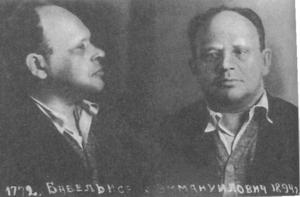
This afternoon, I stopped by the St. Mark’s Bookshop to look through the Collected Stories of Isaac Babel on my way to buy groceries for dinner. I found the book in the back of the bookstore, on a shelf below Paul Auster and above Italo Calvino. I knelt down and read about how Babel had been killed by the NKVD, after he was arrested, forced to confess, and shuttled to a prison camp in Siberia.
To my left, beyond the table of discounted books, an agitated man with white-hair and a short, neat beard was talking politics with the woman behind the desk. When he mentioned Rumsfeld, he swung his arm above his head to make a point. When I looked over to him I noticed that I was crouching next to a rack of postcards with photos of the president and his administration. Their faces had been doctored, certain features were elongated, others erased. Rumsfeld was a monster with tiny eyes and a sharp pointed head.
“The people I know who have been shot,” man with the white hair declared, “were shot because they were thoroughly understood.”
“That’s what I’m saying,” said the woman. “It’s better to be misunderstood.”
“I totally disagree,” he said. “I want them to understand me. That’s what’s important.”
“But then they’ll shoot you.”
“Great.” He threw both hands above his head.
“But you’ll die.”
“At least then they’ll understand who they were messing with.”
The Paper Cut
After alcoholism, heart-disease, near-sightedness, divorce, bankruptcy, and depression, the paper cut is the most serious occupational hazard of the writer. Its menace passes largely unnoticed, and we are all its silent victims.
All paper cuts are not created equal, but each is nasty in its own way. The truly painful paper cut seems to hurt more than it has any right to. We understand the justice of bruises, burns, and scrapes - the pain we feel seems proportional to the evidence of the injury, but the case of the paper cut confounds us. A little epidermal slice, a spot of blood, are all we have to show for our affliction. Any calls for sympathy are in vain. The paper cut infantilizes the writer. We suck our fingers in disgrace.
Moreover, the paper cut is the painful reminder of the physical nature of the book. As much as we may wish to believe that in the beginning was the Word, we know that things were here first, and that they will remain long after the last remnants of language have disintegrated.
All paper cuts are not created equal, but each is nasty in its own way. The truly painful paper cut seems to hurt more than it has any right to. We understand the justice of bruises, burns, and scrapes - the pain we feel seems proportional to the evidence of the injury, but the case of the paper cut confounds us. A little epidermal slice, a spot of blood, are all we have to show for our affliction. Any calls for sympathy are in vain. The paper cut infantilizes the writer. We suck our fingers in disgrace.
Moreover, the paper cut is the painful reminder of the physical nature of the book. As much as we may wish to believe that in the beginning was the Word, we know that things were here first, and that they will remain long after the last remnants of language have disintegrated.
Subscribe to:
Posts (Atom)

